We remain fully operational. Our teams are working around the clock to ensure your deliveries continue safely.

DOWNLOAD THE APP


Customer Services
Copyright © 2025 Desertcart Holdings Limited
DOWNLOAD THE APP

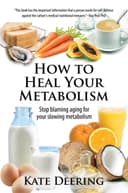
How to Heal Your Metabolism: Learn How the Right Foods, Sleep, the Right Amount of Exercise, and Happiness Can Increase Your Metabolic Rate and Help Heal Your Broken Metabolism [Deering, Kate] on desertcart.com. *FREE* shipping on qualifying offers. How to Heal Your Metabolism: Learn How the Right Foods, Sleep, the Right Amount of Exercise, and Happiness Can Increase Your Metabolic Rate and Help Heal Your Broken Metabolism Review: A nice addition to the "metablism equals health" library - I picked this book up while the Kindle version was on sale for 99 cents. My dollar was well-spent. Ms. Deering begins her book by telling her story of how under eating and over exercising, along with partying a little to hardily, damaged her health. Next she defines good health. In short, good health is having a high metabolism, which ensures that every process in our bodies is functioning optimally. Hint: thyroid function plays a huge role metabolism. So how do you go about raising your metabolism? As you might expect, what you eat is important. The bulk of the book explains which foods to eat for good metabolic health. There might be some surprises on the recommended and not recommended foods lists, depending on your nutritional education up to this point. Saturated fat, sugar, including fruit, and protein, especially milk and gelatin (via broth and collagen powder), get a thumbs up. Polyunsaturated fats, grains, legumes, and nuts get a thumbs down. Ms. Deering also warns of the dangers of too many leafy greens, especially uncooked, and over-reliance on muscle meats. Of course there's more to health than food. The remainder of the book addresses supplements (thankfully real food is recommended over expensive supplements), balancing blood sugar, exercise, sleep, water consumption (you might find more surprises in this section) and happiness. A nice FAQ section clarifies some points raised in the text, and we get a sample weekly menu plan, recipes, and best foods lists. Prior to reading this book I was familiar with the concept of better health through a higher metabolism. I was also aware of the dangers of polyunsaturated fats, the benefits of saturated fats, and the ins and outs of meat, broth, gelatin, milk, grains, legumes, nuts, vegetables, and fruits. However I hadn't before read a presentation put together as well as this one is. The material is organized in a such a way that one topic flows nicely to the next. You're not left wondering what the heck you should eat. I also had never before considered the suggestions for meal building given in the book. Being a reader of health books, many of them of the paleo persuasion, I'd picked up the idea that fruit should not be a main carbohydrate source and milk is an inadequate protein source. I'd also picked up the idea that a meal wasn't complete without a chunk of meat or eggs on my plate and that I should eat as many vegetables as I can choke down, especially leafy greens (I'm not a big vegetable lover). Happily, after reading Ms. Deering's book, I now have some new ideas for how to build meals that I enjoy and that will be good for me. I also have some ideas for including "snacks" in my meal plan to keep my book sugar stable. I rarely take notes when I read a book, but I took notes throughout this one. Overall, this is an excellent book that I highly recommend everyone read. There are some mistakes - typos, grammatical errors, and spelling mistakes - that a good editor could easily fix. I'd love to see a second edition with the mistakes corrected - I'd buy a second, paper back copy for myself in a heartbeat. Despite the errors, I give the book five stars. I may have only paid 99 cents for this book, but it's well worth the full price. Review: Amazing results after 2.5 months. Really improved the quality of my life. - Context: I bought this book, in July, and I have been implementing / following it's principles to the best of my ability ever since. I come from a Low-Carb/Paleo background, and I used to do strength training, but all of that changed when I found out I had cancer. After I realized that LowCarb/Paleo doesn't make you immune to cancer (as it is sometimes implied by some authorities) and also that I didn't knew enough about cancer, I started researching about different theories/nutritional approaches that I could implement, either therapeutically or after I got better. Eventually I came across Dr. Raymond Peat's articles, and although they can sometimes be a little cryptic, his ideas seemed very interesting and resonated with me, although I wasn't quite sure how to implement some of them in a more practical way, because he doesn't lay out a simple plan/approach. This book came exactly at the right time and provided me with a more practical set of principles, based on Dr. Ray's work (and others). What I did: - I increased my calorie intake from a maximum of 2500 Kcal (Low-Carb/Paleo), to more than 3000 Kcal a day (50%-60% Carbs), using whole foods, following the principles laid out in the book. - I stopped strength training (Wendler 5/3/1) because I needed a break and also to start enjoying exercise again, so I started doing isolation/bodybuilding stuff 2 times a week (1 movement for the biceps/triceps/pecs/abs/lats), and 2 days a week I started doing squats/deadlifts (light stuff), pushups/dips and some type of pull up. - Every training session lasts only 30 minutes, and I NEVER get to the point were I am breathing heavy, the point is to do more total reps/weight/total volume than last time on each exercise. - I started reintroducing dairy slowly, as I had really strong reactions to it (and some other foods as well, although not as intense), such as abdominal pain/"loose bowels", that would sometimes last for weeks. I started with cheese and then moved on to milk. - I started going to bed early EVERY day. Results: - My body fat went down, to the point I can now see my Abs and a lot of veins throughout my body, which lost it's "fluffy" type look. - My body weight went from 176 lbs to 163 lbs, although some was lost muscle because I stopped strength training. - My sleep it's not perfect (it hasn't been for a long time and it's still a work in progress), but it improved significantly in quality, since it's much deeper than before and it's usually full of dreams. - Temperature (under the tongue) has upped from some cadaveric lows to close to normal levels (36.4 to 37.2 degrees throughout the day) and it's still a work in progress I think. - I can drink milk again (at least up until 800 mL in a row), without any noticeable adverse reactions, and there is no more sensitivity to any of the foods that previously gave problems as well. - I think that there was also a redistribution of fat throughout my body (less fat In my face, arms and legs), but I'm not 100% sure, as I don't have a lot of fat anymore. - My head feels clearer, my ability to think has definitely improved. - I just feel better overall. P.s.: This journey hasn't been all rosy, in spite of all of the positive changes that I have described. There were some setbacks along the way, but you will have to push forward (within reason) in order to be successful with this approach, particularly if you have high stress hormones throughout the day, in which case you will feel like crap for a while, because those hormones will go down, so that your thyroid can slowly start taking over, and that might take a while, depending on you particular situation. Dairy tolerance will start going up also, in time. Keep increasing the amounts progressively, and don't be afraid to cut dairy off, for a day or two, if you start having adverse reactions. Let the body "reset" then start again from where you left off or a lower amount.
| Best Sellers Rank | #49,763 in Books ( See Top 100 in Books ) #31 in Physiology (Books) #90 in Nutrition (Books) #422 in Diets & Weight Loss (Books) |
| Customer Reviews | 4.6 out of 5 stars 1,397 Reviews |
A**.
A nice addition to the "metablism equals health" library
I picked this book up while the Kindle version was on sale for 99 cents. My dollar was well-spent. Ms. Deering begins her book by telling her story of how under eating and over exercising, along with partying a little to hardily, damaged her health. Next she defines good health. In short, good health is having a high metabolism, which ensures that every process in our bodies is functioning optimally. Hint: thyroid function plays a huge role metabolism. So how do you go about raising your metabolism? As you might expect, what you eat is important. The bulk of the book explains which foods to eat for good metabolic health. There might be some surprises on the recommended and not recommended foods lists, depending on your nutritional education up to this point. Saturated fat, sugar, including fruit, and protein, especially milk and gelatin (via broth and collagen powder), get a thumbs up. Polyunsaturated fats, grains, legumes, and nuts get a thumbs down. Ms. Deering also warns of the dangers of too many leafy greens, especially uncooked, and over-reliance on muscle meats. Of course there's more to health than food. The remainder of the book addresses supplements (thankfully real food is recommended over expensive supplements), balancing blood sugar, exercise, sleep, water consumption (you might find more surprises in this section) and happiness. A nice FAQ section clarifies some points raised in the text, and we get a sample weekly menu plan, recipes, and best foods lists. Prior to reading this book I was familiar with the concept of better health through a higher metabolism. I was also aware of the dangers of polyunsaturated fats, the benefits of saturated fats, and the ins and outs of meat, broth, gelatin, milk, grains, legumes, nuts, vegetables, and fruits. However I hadn't before read a presentation put together as well as this one is. The material is organized in a such a way that one topic flows nicely to the next. You're not left wondering what the heck you should eat. I also had never before considered the suggestions for meal building given in the book. Being a reader of health books, many of them of the paleo persuasion, I'd picked up the idea that fruit should not be a main carbohydrate source and milk is an inadequate protein source. I'd also picked up the idea that a meal wasn't complete without a chunk of meat or eggs on my plate and that I should eat as many vegetables as I can choke down, especially leafy greens (I'm not a big vegetable lover). Happily, after reading Ms. Deering's book, I now have some new ideas for how to build meals that I enjoy and that will be good for me. I also have some ideas for including "snacks" in my meal plan to keep my book sugar stable. I rarely take notes when I read a book, but I took notes throughout this one. Overall, this is an excellent book that I highly recommend everyone read. There are some mistakes - typos, grammatical errors, and spelling mistakes - that a good editor could easily fix. I'd love to see a second edition with the mistakes corrected - I'd buy a second, paper back copy for myself in a heartbeat. Despite the errors, I give the book five stars. I may have only paid 99 cents for this book, but it's well worth the full price.
M**A
Amazing results after 2.5 months. Really improved the quality of my life.
Context: I bought this book, in July, and I have been implementing / following it's principles to the best of my ability ever since. I come from a Low-Carb/Paleo background, and I used to do strength training, but all of that changed when I found out I had cancer. After I realized that LowCarb/Paleo doesn't make you immune to cancer (as it is sometimes implied by some authorities) and also that I didn't knew enough about cancer, I started researching about different theories/nutritional approaches that I could implement, either therapeutically or after I got better. Eventually I came across Dr. Raymond Peat's articles, and although they can sometimes be a little cryptic, his ideas seemed very interesting and resonated with me, although I wasn't quite sure how to implement some of them in a more practical way, because he doesn't lay out a simple plan/approach. This book came exactly at the right time and provided me with a more practical set of principles, based on Dr. Ray's work (and others). What I did: - I increased my calorie intake from a maximum of 2500 Kcal (Low-Carb/Paleo), to more than 3000 Kcal a day (50%-60% Carbs), using whole foods, following the principles laid out in the book. - I stopped strength training (Wendler 5/3/1) because I needed a break and also to start enjoying exercise again, so I started doing isolation/bodybuilding stuff 2 times a week (1 movement for the biceps/triceps/pecs/abs/lats), and 2 days a week I started doing squats/deadlifts (light stuff), pushups/dips and some type of pull up. - Every training session lasts only 30 minutes, and I NEVER get to the point were I am breathing heavy, the point is to do more total reps/weight/total volume than last time on each exercise. - I started reintroducing dairy slowly, as I had really strong reactions to it (and some other foods as well, although not as intense), such as abdominal pain/"loose bowels", that would sometimes last for weeks. I started with cheese and then moved on to milk. - I started going to bed early EVERY day. Results: - My body fat went down, to the point I can now see my Abs and a lot of veins throughout my body, which lost it's "fluffy" type look. - My body weight went from 176 lbs to 163 lbs, although some was lost muscle because I stopped strength training. - My sleep it's not perfect (it hasn't been for a long time and it's still a work in progress), but it improved significantly in quality, since it's much deeper than before and it's usually full of dreams. - Temperature (under the tongue) has upped from some cadaveric lows to close to normal levels (36.4 to 37.2 degrees throughout the day) and it's still a work in progress I think. - I can drink milk again (at least up until 800 mL in a row), without any noticeable adverse reactions, and there is no more sensitivity to any of the foods that previously gave problems as well. - I think that there was also a redistribution of fat throughout my body (less fat In my face, arms and legs), but I'm not 100% sure, as I don't have a lot of fat anymore. - My head feels clearer, my ability to think has definitely improved. - I just feel better overall. P.s.: This journey hasn't been all rosy, in spite of all of the positive changes that I have described. There were some setbacks along the way, but you will have to push forward (within reason) in order to be successful with this approach, particularly if you have high stress hormones throughout the day, in which case you will feel like crap for a while, because those hormones will go down, so that your thyroid can slowly start taking over, and that might take a while, depending on you particular situation. Dairy tolerance will start going up also, in time. Keep increasing the amounts progressively, and don't be afraid to cut dairy off, for a day or two, if you start having adverse reactions. Let the body "reset" then start again from where you left off or a lower amount.
M**.
Fantastic information, even for someone working in nutrition for decades .
This book is based upon the research and concepts of Dr Ray Peat. He has a website with loads of great articles, but they're heavily science-based and a bit abstract at times for laypeople, nor does he lay out a specific dietary plan but Kate has compiled his 50+ years of research into a very easy-to-understand guide. It is not a quick fix, fad diet or restrictive approach. Like Kate, I worked in fitness and nutrition for decades and also fell prey to the "carbs are evil/Sugar is evil/fruit is evil" mentality and my body has definitely suffered for that long-term. Being in my 50s now I was struggling with hormone swings, night sweats, weight gain and terrible insomnia which just made everything unbearable. Within days of implementing a few of the basic concepts here, I was sleeping like a baby. I was also looking forward to meals for the first time in ages. What's every bit as valuable as the physical benefits I experienced are the mental and emotional benefits. Folks in the fitness industry tend to be rather perfectionistic and the current cult-like fervor of the fasting, IF and keto brigade are good examples of not seeing the forest for the trees. Cherry picking minimal benefits while ignoring the massive long-term negative effects is a one-way ticket to eventual hormonal imbalance, weight gain, insomnia and constant fatigue; all the long term effects of those current trends. For those of you ready to let go of that and enjoy energy, sleep and lovely meals again, you will love this book. If you're looking for a new diet with a quick-fix for lots of weight loss, this isn't it. This book will bring much needed sanity and energy into your life, which you can then translate into doing more of what you love. If you're on social media, check out Kate on FB or IG as well, she shares great information all the time and is easily to connect with if you have questions.
D**B
Back to Basics
After years of reading about every possible new way to eat, I was struck by Deering's back-to-basics approach. It sounded familiar and a lot like the stuff I was reading 25 years ago. It was also pretty much in line with Ayurvedic principles, which are 5,000 years old. It's a bit more complex than Keto or low-carb because it doesn't exclude any one food group and requires attention to the ideal ratio of macronutrients (protein, carbs, and fat); however, it's worth the effort. All the same, it felt right so I tried it for 6 months and you can see from the photos that my metabolism actually increased--by a lot. I went from a "slow" score of 898 in May 2022 to a "normal" score of 1,079 (the "score" equals calories burned at rest) in May 2023. I started following her macronutrient recommendations in Jan. 2023. The other great thing about her method of eating is that I find that by adding carbs back into my diet, I sleep a lot better. By the way, "carbs" does not have to mean bread, pasta, etc. In fact, most of my carbs come from apples, orange juice (pulp-free), milk and honey, etc. In any case, it's a lot to wrap your head around but it's worth trying. I had to listen to the book AND read it AND refer back to it repeatedly. I also worked with Kate Deering for a few months which really helped me to grasp the suggestions that I still did not understand well. I hope you'll give it a try.
S**Y
Good info but be extremely careful!!
This book is great. However if you follow the principles like I did straight out of the gate you will gain weight. I gained about 8lbs and my mental health plummeted before I stopped and reevaluated. In my opinion the author does not place enough emphasis on...
P**R
Simple and real...learn how to make food your best friend in your quest for health!
I definitely recommend this book for a real education based on metabolic nutrition. Our body is a biological machine, and we need to treat it as such. No tricks, no fads, and no extremes. This is a very easy read and a great resource that I go back to again and again to dig deeper into my understanding of how my body is using the food that I choose. I recognize very quickly when I make choices that don't support my health. When I follow the guidelines in this book, I feel better, sleep better, think better, feel stronger, have more energy, and lose weight. Kate is not selling a diet, she's giving you an education so you can create a real nutrition plan to support your active lifestyle and heal from the abuse that a lifetime of eating from a broken food industry and biased nutrition research has heaped upon your body. Read it, start small and build with experience. Reread and practice. It's about a lifestyle, not a diet or a quick fix. Learn how to take care of yourself and make a real change in your health!
G**N
Helped me HEAL
Oh my! I believe this book was written for me. I’ve had many of these problems and found I had Sibo/Candida/Heavy Metal problems and really needed to detox. I was having auto-immune, thyroid, gallbladder, IBS, depression and brain fog. I tried all kinds of anti-herbals, green detoxing, colon cleansing, probiotics, infrared sauna, etc. I was only making small improvements here and there but nothing significant. Before being diagnosed, I was previously eating a vegetarian diet and then went to a vegan diet. Plus, I was running marathons. Things went very wrong for me shortly thereafter. It took awhile for me to come to terms with it being the diet. But as I read/researched more, I started adding meat and later dairy back to my diet. I was getting some improvements. I still do a few supplements because my micronutrient testing showed some were too deficient for my body to perform normal digestion/detoxing. But since reading and following Kate’s guidelines, I’m doing so much better!!!! And progress happened very quickly the more I used the guidelines. And to be honest, I can tell my body was CRAVING these foods but I denied them thinking I was ‘too weak’ to follow a vegan diet. Now, I’m much more in tune with my body’s needs. Thank you, Kate, for such an AMAZING book and great insight!!! I am so happy to be performing my work normal schedule again including adding back exercise and most importantly, SLEEPING. (review is from Vanessa - not Gregory - he purchased for me)
E**H
Not convinced
The author argues that the Keto diet is unhealthy because we need carbs and uses testimonies to prove it. However, in all the testimonies, the person was on a keto diet AND over-exercising. When they added carbs AND stopped eating vegetables AND stopped over-exercising, they felt better. Since three variables changed, how can she be sure which one made the difference? What if eliminating vegetables made the difference or reducing exercise or both? The author also argues that coffee is a health food you should supplement with, but I’m unconvinced that a substance that’s highly addictive and makes your breath smell awful is a health food. I’m currently a non-drinker of coffee and am unconvinced to pick up this highly addictive habit. And finally, the menu at the end looks mostly like a liquid diet. Throughout the day, you’re drinking milk, OJ, coffee, and bone broth with fruit and tubers. So, basically a vegetarian diet with occasional meat. I would starve on this diet and not feel well either since the author only wants you eating red meat once or twice a week or even not at all. As someone with iron deficiency anemia, if I go more than one day without red meat, I feel like crap, so this diet wouldn’t work for me.
Trustpilot
1 month ago
2 weeks ago