We remain fully operational. Our teams are working around the clock to ensure your deliveries continue safely.

DOWNLOAD THE APP


Customer Services
Copyright © 2025 Desertcart Holdings Limited
DOWNLOAD THE APP

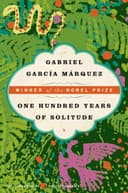
desertcart.com: One Hundred Years of Solitude: A Novel (Harper Perennial Modern Classics): 9780060883287: Gabriel Garcia Marquez, Gregory Rabassa: Books Review: One for the ages! - One Hundred Years of Solitude really isn't as difficult or confusing as some reviews make it seem. People make it seem like it's impossible to get through so many repeating names, but even when the characters share a name, almost every single character (until the last generation--and by that point the first characters are long gone so that it wasn't really confusing) has a unique name. How is that confusing? And anyway, it doesn't take too many chapters or a genius to figure out they all share the same names for a reason. Also, I must say, if you don't like the first 50-100 pages, you probably aren't going to like the rest of the book. It stays like that... Plus, the first Jose Arcadio Buendia is one of the more entertaining characters in the book, in my opinion. But, I think Aureliano Segundo and Remedios The Beauty were the highlights in this book. I was cracking up throughout their scenes. Although I feel I missed a lot about what was going on symbolically whilst reading (mostly a lot of the religious stuff), I still found this book to be extremely enjoyable. It's inspiring and surreal, whimsical, funny and sad--and it all causes a person to feel very introspective, because it blends so many aspects of what makes up a person's life. I looked up some of the themes and motifs after reading to make sure I caught everything, and I prefer many of my own interpretations. And I think Gabriel Garcia Marquez meant to write it in a way that was a more personal experience. At the end notes, he mentions in an interview how he wanted to capture the way an abuela tells stories to her grandchildren-- and I got that vibe the whole time. And a lot of times, the surreal in crazy old latin american stories is what makes you remember the life lessons behind the story. And I feel like that's what happened here. But again, I feel like most people I know wouldn't like this book, and I can see where they're coming from. It definitely isn't for everyone. And I must stress that that's not coming from a pretentious place. His writing style will be frustrating to many readers I'd presume, because it's really just incredibly unique. But, if you can get past the style (long paragraphs, little fluctuation in narration, mentioning things that haven't really happened yet, or no main protagonist... etc) and the repetition of names, it really isn't super complicated or anything. It isn't perfect, but It's great. And even though I started this review planning to give it four stars, after writing it--I think it's an important enough, and intricately weaved enough, and a unique enough a piece to warrant a 5-star from this fella. Review: Winner of the Nobel prize - This is a good book.



| Best Sellers Rank | #2,658 in Books ( See Top 100 in Books ) #27 in Contemporary Literature & Fiction #125 in Classic Literature & Fiction #368 in Literary Fiction (Books) |
| Customer Reviews | 4.6 out of 5 stars 4,489 Reviews |
M**S
One for the ages!
One Hundred Years of Solitude really isn't as difficult or confusing as some reviews make it seem. People make it seem like it's impossible to get through so many repeating names, but even when the characters share a name, almost every single character (until the last generation--and by that point the first characters are long gone so that it wasn't really confusing) has a unique name. How is that confusing? And anyway, it doesn't take too many chapters or a genius to figure out they all share the same names for a reason. Also, I must say, if you don't like the first 50-100 pages, you probably aren't going to like the rest of the book. It stays like that... Plus, the first Jose Arcadio Buendia is one of the more entertaining characters in the book, in my opinion. But, I think Aureliano Segundo and Remedios The Beauty were the highlights in this book. I was cracking up throughout their scenes. Although I feel I missed a lot about what was going on symbolically whilst reading (mostly a lot of the religious stuff), I still found this book to be extremely enjoyable. It's inspiring and surreal, whimsical, funny and sad--and it all causes a person to feel very introspective, because it blends so many aspects of what makes up a person's life. I looked up some of the themes and motifs after reading to make sure I caught everything, and I prefer many of my own interpretations. And I think Gabriel Garcia Marquez meant to write it in a way that was a more personal experience. At the end notes, he mentions in an interview how he wanted to capture the way an abuela tells stories to her grandchildren-- and I got that vibe the whole time. And a lot of times, the surreal in crazy old latin american stories is what makes you remember the life lessons behind the story. And I feel like that's what happened here. But again, I feel like most people I know wouldn't like this book, and I can see where they're coming from. It definitely isn't for everyone. And I must stress that that's not coming from a pretentious place. His writing style will be frustrating to many readers I'd presume, because it's really just incredibly unique. But, if you can get past the style (long paragraphs, little fluctuation in narration, mentioning things that haven't really happened yet, or no main protagonist... etc) and the repetition of names, it really isn't super complicated or anything. It isn't perfect, but It's great. And even though I started this review planning to give it four stars, after writing it--I think it's an important enough, and intricately weaved enough, and a unique enough a piece to warrant a 5-star from this fella.
J**T
Winner of the Nobel prize
This is a good book.
E**R
A Beautiful, Confusing, and Kind of Sad Story About Being Human
I went into One Hundred Years of Solitude thinking it was just a normal story about a family, but I quickly realized that it’s not normal at all. The book follows the Buendia family over many generations in the town of Macondo. At first, it feels like a simple story about building a town and starting a new life. But as the book goes on, the story becomes stranger and more emotional. Ghosts appear, time feels like it loops instead of moving forward, and people repeat the same mistakes over and over. Even though some of the events are unrealistic, the emotions behind them feel real, which made the story hit harder than I expected. One of the strongest parts of the book is how it shows patterns in families. The Buendía family repeats the same behaviors, the same relationships, and even the same names across generations. This can be confusing, but it’s also kind of the point. The book shows how people often think they’re breaking away from their past, but end up stuck in the same cycles anyway. It made me think about how family habits and expectations can follow people even when they try to be different. The repetition starts to feel sad after a while, because you realize a lot of the characters don’t learn from what came before them. The setting of Macondo is another strength. The town grows along with the family, and as the family starts to fall,jk apart, so does the town. Macondo feels alive, like it’s affected by the choices of the people who live there. The magical parts of the story, like ghosts or people living way longer than normal, don’t feel random. They represent how memories, trauma, and the past stay with people, even when they want to move on. The magic makes the story feel emotional instead of just strange. That said, the book is definitely hard to follow at times. There are a lot of characters with the same names, and the story jumps around in time. I had to stop and reread parts to figure out who was who. This made the book frustrating at moments, especially when the plot slowed down and focused on long descriptions. Some sections felt like they dragged on, and I lost focus a few times because of how detailed the writing is. Even with those struggles, the book leaves an impact. It’s not just about one family. It’s about loneliness, memory, and how history repeats itself when people don’t learn from it. The title makes sense by the end because so many characters are surrounded by people but still feel alone. The story doesn’t wrap everything up in a neat, happy way, but that honestly makes it feel more real. Overall, this is a challenging book, but it’s meaningful if you take your time with it and think about what it’s saying.
J**I
All in the family...
I first read "One Hundred Years of Solitude" not long after it was first published in English, almost 40 years ago. It was a wonderful, and magically, if you will, introduction to Latin American literature. Subsequently, I've read several other works by Marquez, notably, Love in the Time of Cholera (Vintage International) some 20 years later, but none have quite cast the spell of my first "love," this one, so I figured a re-read was in order. The "magic" of magic realism has lost none of its charm. The story involves six generations of one family, established by Jose Arcadio Buendia and Ursula Iguaran, who also helped found the town of Macondo, in the lowlands of Columbia, though the country is never specifically identified. The in-breeding (and also out-breeding) in this one family is simply astonishing. I can't remember if the original edition had a genealogical chart at the beginning, but this one does, and it provides an invaluable reference in keeping the philanderings, and the subsequent progeny, straight, particularly since numerous individuals over the generations have the same name. What is the "Scarlet Letter" that is prophesized for a family with such a high degree of consanguinity? That a child will be born with a pig's tail. Marquez dazzles the reader with the intensity of his writing; it's as though he had a 1600 page book in him, but is given a 400 page limit. It is the furious sketching of a street artist, making every line count in a portrait. The strengths, follies, and interactions of the men and women are depicted in memorable events. And there seems to be a realistic balance and development of his characters. Marquez is also the master of segue, from one event to the other, and from one generation to another, with his characters moving from swaddling clothes, on to adulthood, and then into their decrepitude. From my first reading, I had remembered Rebeca, with her "shameful" addiction to eating dirt. First time around, I chalked it up to Marquez's "magical realism," since no one really ate dirt. Several years later I learned that it is a wide-spread medical problem, often driven by a mineral deficiency that the person is trying to remediate. The author also describes the disease of insomnia which was spread to Macondo, with an accompanying plague of forgetfulness. Magical realism, or the forgetfulness of the "now" generation that has lost the stories of the past? Establishing the time period comes slowly. Marquez mentions Sir Frances Drake, but he is in the unspecified past. It is only when a family portrait is taken, as a daguerreotype photo, that one realizes it must be in the 1840's-50's, with six generations to go. There are a multitude of themes: since this IS Latin America, Marquez has the obligatory gringos and their banana plantations (alas, all too true); there is endless, senseless war, with the two sides eventually unable to state what they are fighting for, except, of course, the war itself; there are the women who drive men crazy with their beauty, and there is the spitefulness of women to each other (alas, again, the "sisterhood'); there is economic development, and a worker's revolt, and the use of other members of the same class, but in uniform, who repress it; there is the role of the Catholic Church in Latin America, and even a family member who would be Pope and there are unflinching portrayals of the aging process, alas, to the third power. On the re-read, I noticed a portion of the novel that was much further developed in Innocent Erendira: and Other Stories (Perennial Classics) . Also nestled in the book was an important reference: "Taken among them were Jose Arcadio Segundo and Lorenzo Gavilan, a colonel in the Mexican revolution, exiled in Macondo, who said that he had been witness to the heroism of his comrade Artemio Cruz." Checking Marquez bio, he has been a long-time friend of Carlos Fuentes, slipped this reference in 100 years, which is an omen for me, since I was considering re-reading Fuentes marvelous The Death of Artemio Cruz: A Novel (FSG Classics) And in terms of omens, redux even, do future travel plans include meeting another character in the book, the Queen of Madagascar? I recently had dinner with a woman who had been Ambassador to one of the Latin American countries. Spanish is her native language, and she still reads some of the Latin American writers in Spanish to "keep her language skills up." As for "100 years," she had read it four times, each time in English. It's a record I am unlikely to repeat, but this novel, which honors the Nobel Prize with its name, could use a third read, if I am granted enough time. It ages well, sans decrepitude, and provided much more meaning the second time around. 6-stars.
S**T
Book Review: 100 Years of Solitude
100 Years of Solitude by Gabriel García Márquez follows the Buendía family through their many generations. It all starts when José Arcadio Buendía stumbles across an essentially uninhabited piece of land where he establishes the city of Macondo (Márquez 23-24). At the beginning of the book Macondo is known by mainly only the Buendía family as well as gypsies that travel through the town to display their mysterious and magical inventions (Márquez 1). Throughout the book, the town becomes more populated with the births of seven generations of the Buendía family and other outsiders that happen to stumble upon Macondo. After the founding of Macondo, the want for exploration grows shortly after Úrsula Iguarán, José Arcadio Buendía’s wife, discovers a route that connects Macondo with the outside world; it becomes populated (Márquez 36). As Macondo grows so do the conflicts that occur. War and terror break out and disrupt the peace and solitude that once consumed Macondo (Márquez 100). The whole city is on edge because of the terror of war and the frightening changes in the city. As time goes on so do the generations which means more and more childern, but it also means that death lingers on those of the earlier generations. The city builds a railway, allowing easier accessibility to and from the city attracting more and more people (Márquez 223-224). Because of this increase in transportation, foreigners set up a banana plantation in Macondo, they bring new technology and big corporations into the small city (Márquez 228). But mainly, the plantation took advantage of the citizens, and could use them because of the lack of money and power (Márquez 237). The large business takes control of the small town by attacking the villagers and workers with force (Márquez 237-238). Their aggression causes the workers to go on strike which ends terribly with many deaths (Márquez 304-307). These deaths take a toll on the village, causing a decline in spirits and overall well-being. The town is declining and will never be the same again throughout the book. Through the passing of time, the memories fade and no one seems to remember the correct history of the town (Márquez 309). They only remember what the government wants them to remember which is now found in the school textbooks (Márquez 348). The death of Úrsula initiates the decline of the Buendía family as well as what little is left of the village (Márquez 341-342). The 7th generation is the last of the Buendía family and the city itself. The prophesy of their family that is read by Aureliano (II) is a detailed description of his family’s fate, and the very last thing he read was the end after 100 years (Márquez 416-417). The author, Gabriel García Márquez, uses magical realism to communicate the physical reaction of events by ways of the natural world. Magical realism is a literary device that in the book is displayed as a natural occurrence that the characters accept but us the reader interprets it as a phenomenon and is baffled as to why it seems normal. In 100 Years of Solitude magical realism is used in many different instances, and the majority of those instances have to do with the balance of nature. After the deaths of the workers on the banana plantation, it rains continuously for five years and the civilians think normally of it (Márquez 315). The rain symbolizes the washing away of the memories of the people and their troubled pasts. Márquez emphasizes this by using realism to convey an obvious difference that the reader notices to inflict an over exaggeration that helps convey the importance of that particular event. An unnatural occurrence in the human life is reciprocated by a representation of this as an unnatural occurrence in nature. Another literary device used in this novel is symbolism. There is an instance where after José Arcadio Buendía’s death they are measuring his coffin and yellow flowers begin to fall out of nowhere from the sky. José had just died and the city is preparing for his funeral. At first I assumed that they were talking about a few petals that blew past a window, but the flows are later described as a blanket and covering the streets (Márquez 140). The flowers aren’t just any that are falling from the sky, but they are yellow, a symbol of light. Flowers are also used to honor the dead so having huge masses fall from the sky represents the heavens sending a message to his family and friends of his return to heaven. These grand gestures are both approved by the citizens of Macondo, thus both are examples of magical realism, but one could argue that both of these scenes could represent symbolism. When magical realism is implemented, it means that the author is trying to convey a significant importance about that scene in a symbolic way. The rain is a symbol of mourning and because it rained for five years it represents a huge loss to the city. The flowers are a symbol of recognition and pride so having hundreds of thousands of flowers fall from the heavens is magical in it’s self but also represents the peaceful passing into heaven. This was a fascinating book that got me thinking but also confused me which is what I assume Márquez wanted from this novel. The book often switches between different points in time, fast forwards though time, uses magical realism, makes me as a reader question the intent of his writing, and frustrates me through the motif of not learning from past mistakes. This crazy book is challenging, interesting, and funny. I recommend this book to any 16 year old that wants to challenge themselves with a complicated read and definitely to 18-19 year olds to help them prepare for reading challenging material in college. This is a great read for anyone that chooses to challenge themselves, but that being said I am never able to read anything very challenging with other big stresses, to-dos, and due dates in my life, so being a student and having to understand the book and study for finals was a bit challenging to do at the same time, because I couldn’t focus on the book as much as I would have liked during that time period. I appreciate the challenge and confusion that Márquez has written but there were some points of the book that was a bit too confusing, for example the names. I believe that the confusion between the names is what Márquez had intended because of the meaning and message that each of the names add to the character’s life and personality, but eventually I gave up trying to remember who was who. This gives me an excuse to re-read the book with maybe a different perspective and focus next time. Overall this is a challenging read for people that love to read. This book requires the reader to have the time to dig deep into the book and try to analyze any literary devices that seem important to the overall theme(s) of the novel. Márquez, Gabriel G. One Hundred Years of Solitude. Harper Perennial Modern Classics, 2006. Print.
K**R
I loved the Novel, but not the "book" (edition)
Thumbs up to Gabriel Garcia Marquez' fantastical epic novel, "100 years of Solitude"! It is the story of Macondo, a fictional South American town founded by the bold patriarch of the Buendia clan, Jose Arcadio Buendia. Twenty households of folks subsist in peace and relative isolation, minding their own business, until hosts of visitors and newcomers, bringing new ideas--scientific, political, and economic--descend upon the sleepy village. These developments, along with the growth and development of the Buendias through generations, lead to unexpected and often bizarre and tragic results. Marquez' imagination seems to know no bounds, as he recounts story after incredible story in ridiculous detail, which are bound together with certain common recurring themes. The style of the novel, "magical realism", means that the most freakish stories are told in the same matter-of-fact tone as the most prosaic ones. Marquez grew up in the home of his grandparents, natural story tellers, who related countless such tall-tales in such a way, blurring the boundaries of reality and unreality. My favorite of these tall tales is the part, toward the end of the book where it rains for "four years, eleven months, and two days". What they went through during that time was hilarious and outlandish! Another big theme is the recurring personalities of the male Buendias across five generations. The author does a good job of creating real and interesting characters, but I particularly enjoyed some of the female ones, as they were each quite different and extraordinary. Ursala, the matriarch, is a central central figure who lives over a hundred years, during which she works endlessly to care for the family throughout the generations. Fernanda, the wife whom Aureliano Segundo takes from a ruined aristocratic family in "the Highlands", never really fits in. The best Fernanda scene is during the rainy season, when she drones on complaining at Aureliano for an incredible three pages with just one sentence! One of the many themes in the book that interest me is the strong sense of irony which pervades the novel on many levels. The overriding irony which also underlies the whole story is the circular nature of time--the recurring personality types and their dysfunctional actions which they seem doomed to repeat. This is an irony of tragic futility. At times it seems tedious, but the author uses it to brilliant effect, and particularly at the end, where the story culminates with one surprising final ironic twist. These are just a few of my ideas and reflections about this monumental work. Lastly, I suggest that you buy one of the other editions of the book because this one is rather flimsy and cheaply made. The Oprah book club edition (which I have not seen) can be had for $7.00, including shipping, and the hardback for $11.12, if you click on the words "32 new". I hope this helps. Enjoy!
D**N
Incredible in its literary machinations
In the world of this story, solitude can be shared as well as cherished. It can be something that offers consolation, but it can also be an insufferable burden. In the world of this story, part real and part fantasy, with the distinction between the two oscillating periodically with random amplitude, ice is a rare jewel, wars are imagined to be fought using magnifying glasses, and the immune system can be almost infinitely resistant to pathogens. Obstinacy and dogmatism become tools for survival and provoke warfare, and keep the imagination at abeyance. Fear is ranked less than curiosity but curiosity can trounce social coherence and shared purpose. Curiosity dominates, beginning at birth, with no concern at all with any wax of Icarus. In the world of this story, the proliferation and diversity of avian fauna can operate as a directional beacon as well as an acoustic source of madness. Inventions can be in the imagination and as is canonical, can interfere with family life with its predilection to supervise and make rigid its younger members. Fortune telling and other flights of fancy can coexist with scientific and technical innovation with wandering gypsies being the innovators. There is also a slice of post-modernistic nihilism where words have filed for a divorce from their referents. In the world of this story, loss of memory is a collective infection as is insomnia. There is regularity but also an out-of-equilibrium ethos viz a viz the dance, a consequence of the precision of the metronome and the pianola. Social graces and the rigidity of manners are here also, as well as prudence and other forms of linguistic tools of social manipulation. But fantasies, and the tools used to prove them out, can be destroyed with as much zeal as when they were invented. In the world of this story, the soil of the land can be tread, even consumed, without taking into account any deity and not even reaching out for its assistance. War is brought about by the usual divisions, the usual ideological spirits, coupled with both religious and anti-religious fever. Fakery and quackery, and charlatans diffuse into the territory with ersatz concepts and inert pills. The cruelty and brutality of leaders meshes well with their political dogmatism. In the world of this story, the inability to sleep is not because of worry or biting conscience, but rather because of a plague. Passion and sex are not violent but loud, enough to wake the dead, and accomplished in inopportune places. As is typical, those who fight these wars did not know why they were doing so. Genetic purity results in challenges to the status quo, and with characteristic lack of spine exercises violence against the wild beasts who possess it. In the world of this story, the exhilaration of power (however fictitious is the latter) is countered by other enraptured and exaggerated emotions, leaving power wallowing like a hog in the dung heap of temporary glory. Isolation causes power to decrease exponentially, leaving its victim disoriented and more solitary than ever. Hell then becomes an anti-Sartrian lack of other people. In the world of this story, family backgrounds, affiliations, names, and characteristics are the result of random perturbations and combinations collecting charge when rubbing together, with consequent repelling when collecting the same sign, and coming together if not. Volatility in outlooks occurs without the stultifying latency of inaction. In the world of this story, beauty, incredible beauty, unbelievable beauty makes its appearance and instills both typical and atypical reactions, mesmerizing both the weak and strong, but inducing solitude in its bearer. But this beauty is natural, to be distinguished from the ersatz beauty of the those in authority, wrapped as it is typically is in bangles and crepe paper. In the world of this story, towns and villages can be transformed by inventions as well as doubt, by decadent saboteurs who open their triangles to any willing and paying cylinder. Tolerance as well as xenophobia is clearly manifest with respect to the skin rash of foreign elements who diffuse across boundaries and ergodically mix with the inhabitants, transforming its architecture and forcing them to take on false manners and an excess of tact, prudence, and ethnic tolerance. In the world of this story, intuition can win over perception, and cognition can sometimes win over intuition, but ice can be made in a hot jungle. Gluttony is celebrated as hospitality. Stomachs can at times have unbounded volume. Frivolous thoughts are sometimes quickly suppressed... ....but descriptions use sentences that run on as effectively and magnificently as the human generations that span this story; this incredible display of literary machinations.
K**R
If you are looking for an epic novel to steal your breath away, look no further!
"Then he made one last effort to search in his heart for the place where his affection had rotted away, and he could not find it." ― Gabriel García Márquez, One Hundred Years of Solitude This dazzling tale of the Buendía family spans generations. It is a rich account of people carving out a life for themselves in Macondo, a town founded by the patriarch, José Arcadio Buendía. "At that time Macondo was a village of twenty adobe houses, built on the bank of a river of clear water that ran along a bed of polished stones, which were white and enormous, like prehistoric eggs. The world was so recent that many things lacked names, and in order to indicate them it was necessary to point." José Arcadio Buendía is a corker! He is so hell-bent on making a wondrous discovery that he fritters away the family money on inventions purchased from a wandering troop of gypsies who miraculously show up in Macondo on occasion. Thankfully, his levelheaded wife (and first cousin), Úrsula Iguarán, works herself to the bone to make sure the family won’t starve to death. During this fantastical journey, wars were fought, fortunes won and lost, and hearts wholly decimated, leaving the jilted lovers dead in a flower bed. It must be said that the Buendia family’s foolish choices are an endless source of drama and entertainment. "Look at the mess we've got ourselves into," Colonel Aureliano Buendia said at that time, "just because we invited a gringo to eat some bananas." I’ve read Márquez before and loved his work, but this was a whole other animal! He expertly blurs the line between magic and realism so smoothly that it feels as if he was creating cinematic electricity! The horror is tempered by a big dose of whimsy that had me laughing through my tears. The writing is agonizingly beautiful, and each character exquisitely drawn. In a lifetime of reading, there are only a few extraordinary novels that touch the very fabric of a person’s being—For me, One Hundred Years of Solitude is one of those. I was transported into Márquez’s dreamlike creation, and for the past few days had forgotten the real world and lived entirely in his. My only regret is that it all had to come to an end. So, if you are looking for an epic novel to steal your breath away, look no further!
Trustpilot
1 month ago
1 month ago