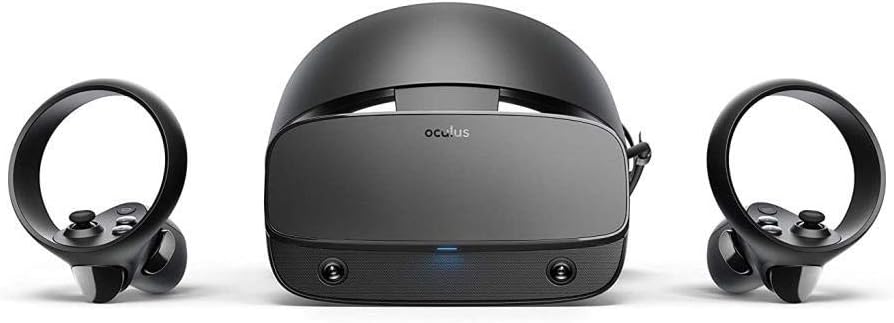



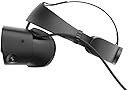
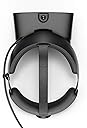
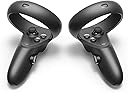
Oculus Rift S PC-Powered VR Gaming Headset
Product ID: 122884043
🎮Top VR game library access
🎯Oculus Insight room-scale tracking
👓Next-gen optics, vivid display
🎮 Step into the future of gaming — where your reality levels up!
The Oculus Rift S is a PC-powered VR headset featuring a vast library of Oculus-exclusive games, next-gen optics for vivid visuals, ergonomic Halo headband design for comfort, intuitive Oculus Touch controllers, and Oculus Insight tracking technology that enables sensor-free, room-scale VR experiences.


| ASIN | B07PTMKYS7 |
| Batteries | 4 AA batteries required. (included) |
| Best Sellers Rank | #28,544 in Video Games ( See Top 100 in Video Games ) #306 in PC Virtual Reality Headsets |
| Customer Reviews | 4.3 4.3 out of 5 stars (18,756) |
| Date First Available | March 18, 2019 |
| Is Discontinued By Manufacturer | No |
| Item Weight | 4.9 ounces |
| Item model number | 301-00178-01 |
| Language | English |
| Manufacturer | Oculus |
| Product Dimensions | 10.94 x 6.3 x 8.27 inches; 4.94 ounces |
| Release date | May 21, 2019 |
| Type of item | Video Game |
Q**K
THE VR Headset to Buy
I have been completely blown away by the quality of the Rift S given it's $400 MSRP. The price and quality of this headset make it THE headset to buy in 2020. Any apprehensions I had about this device were completely smashed after my purchase and use. Inside-Out Tracking/Room Scale. Is the Rift S tracking as good as the Vive/Index that use multiple towers and outside-in tracking? No, BUT, during gameplay is there any noticeable or meaningful differences in the Rift S? Also no. I don't know how Oculus has done it, but the tracking in this headset is phenomenal given you need no towers or outside sensors to dive into a VR title. While it's not AS good as other methods if you really test it and look for flaws, you wont notice in normal gameplay and the Oculus' inside-out tracking makes it much more portable and easy to set up. A definite win for this headset. 80hz Displays. I game at 144hz on my desktop monitors and was expecting to find issue with the 80hz displays built into the Rift S. Surprisingly, I rarely ever notice and when I do, it's the fault of my aging GPU causing hitching and not the displays. Is it as good as the 120hz displays on the Index? No, but it's also less than half the price. Display Clarity/Quality. I expected to have visual compromises in a $400 VR headset. Imagine my surprise to find that the Rift S looks MILES better than the HTC Vive. The "screen door effect" of this headset is very, very minimal, and the picture is much clearer than expected. About the only time I've ever found myself squinting because it was hard to see was on the rare occasions that I'd be tinkering with settings in a browser or application while mirroring my desktop in VR. Halo Strap. I didn't think it would be comfortable, but it is hands down the best VR strap I've ever used. But, there is a learning curve to figuring out the proper way to put this headset on so that it's comfortable and fits well - be sure to do some reading online because Oculus does a poor job of explaining the best way to use this somewhat unintuitive headset strap. Once you find the proper fit, you'll be able to play for hours comfortably. Durability. As soon as I opened the Rift S I immediately became apprehensive of the durability of the Halo strap, mounting point of the display to the Halo strap, and thick kink-prone cables. The concerns I had with the Halo strap and mounting point for the headset are all but gone after many on/off repetitions and a few hard bumps. Inevitably, the cable will get kinks, but it's thick, sturdy, and has survived being yanked out of the top of the headset display a couple of times. At the end of the day, I'm satisfied that the Rift S will last years. Worst case, if it doesn't, the halo strap can be replaced for $60 and the cable for $80 (both are available to purchase from the Oculus website). Built-in Speakers. Me, before buying the Rift S: "How can tiny speakers built into the strap of a headset sound like anything but complete garbage? At least I can plug my good Shure earbuds into it." Me after buying the Rift S: "I'd rather use the built-in speakers than mess with headphones and cables." Are the built-in speakers bass-thumping mad-houses? Absolutely not. But the sound is very crisp and clear, has plenty of volume, and the positional audio is surprisingly great. Other Observations: Camera View - You can set a shortcut so that the double-tap of the menu button turns on the exterior camera view, this comes in handy. Controllers - I expected these to be better than the god-awful Vive wands, they are. These controllers are comfortable and intuitive. Battery-powered is a plus, they tend to last for a couple weeks with heavy use and only 1 AA battery is needed per controller. Storage - I recommend getting a small case to store this headset in, due to the long cable and multiple peripherals it'll quickly clutter up your computer desk/office. It's very easy to set up/teardown because there is only one cable to plug in and no towers. Steam Integration - This headset integrates with Steam VR pretty seamlessly, and built-in access to the Oculus store is a plus. Displayport REQUIRED: Read the fine print people. You MUST have Displayport in order to plug in and use this headset. This should not be an issue with most modern desktop GPUs. Overall: If you are thinking about getting a VR headset and don't want to blow the budget, get the Rift S.
J**M
First thoughs of VR
Would like to point I've never experienced VR before, but this VR set is AMAZING when it works. The IPD seems fine on default... Changed it via software and show no changes in vision soz. Gameplay so far is amazing. Only games i tried is beat saber and skyrim so far. Give this a 5 star for graphic, ease of use, setup. Rated 4 due do the issues i ran into so far, and absolutely hate that dumb advertisement window that pops up every time i put headset on for oculus software. Should be option to disable just that tbh unless there is and haven't found it. I've read all the issues and troubleshoot steps of head of time before purchase, and to say the least i was expecting issues. and yes this thing was a bit of a pain to setup. First of all its states my USB3.0 is not compatibility... yet it still plays and opens everything. Only real issue i had was it kept disconnecting, likely due to the USB 3.0. With all the troubleshooting i read online on reddit etc, i somehow got it to stop disconnecting for now. We'll see, even though it still states my USB3.0 not compatibility. Another issue i ran into on Day 3 of use is that the oculus software (Version 12.1) keeps telling to setup my guardian when it was already setup muliple times a day. I believe it still has something to due with the incompatibility of the 3.0 ports using "VIA USB 3.0 eXtensible Host Controller -1.0 (Microsoft)" Since my mobo (MSI GA-78LMT-USB3 6.0) is a small form factor, i have no more PCI-E slots or anything for a PCIE Expansion card, only slot i had was PCI, which heard PCI USB 3.0 doesnt work in most cases and some cases it does. So took my chances with "StarTech.com 4 Port PCI SuperSpeed USB 3.0 Adapter Card with SATA/SP4 Power - Quad Port PCI USB 3 Controller Card (PCIUSB3S4)" Read this PCI slot worked for some. My PC Specs; Win10 Version 1909 Pro edition GPU: GTX1060 OC CPU: FX8370 eight core clocked at 4.2 Mhz 24GB RAM clock at 1600 Will update once i get the card today to see if the incompatibility 3.0 ports can be resolved... UPDATE: "StarTech.com 4 Port PCI SuperSpeed USB 3.0 Adapter Card" Did not work saddly, spoke with start tech support and advised they have no PCI Cards that would support the amount of data that oculus occurs since only 1 channel card. Advised only the PCI-E would work. Saddly do not have a PCI-e slot available. So have to upgrade mobo or deal with the issue. (Personally can't upgrade as it requires upgrading to DDR4 Ram and AMD4 cpu slot as my mobo is older side with DDR3 and AMD3 slot., so will deal with the issue till upgrade in near future saddly) As for the issue, even those ports states incompatibility, it rarely disconnects, maby once a day if cables loose. As for the oculus software forcing to setup gaurdian all the time. This is still happening and apparently its oculus software that the issue and is known. So overall loving the experience except for the 2 main issues. UPDATE: 6/20/2020 Recently upgraded my PC motherboard to MSI MPG X570 Gaming Plus board with Ryan 7 3700x, DDR4 RAM and NVMe SSD. Ran for 2-3 months, and have not one single issue with it disconnecting. Everything seems to run smoothly and runs on max quality. (Still have my GTX 1060 Gaming X OC graphic card.)
S**N
Best bang for the buck in PC VR
If you read most of the negative reviews. They seem to be from people who couldn’t figure out how to get the headset to work or didn’t actually bother to read the specs. You aren’t really offering a useful review because you didn’t do enough research to know you need a display port on your laptop. This headset doesn’t deserve 1 star because of your ignorance. That said, here is what I like and don’t like about the Rift S. What I like: Since I travel for work, lugging the old Rift and setting it up was tedious. After hooking up and aligning all the sensors and the laptop, I often didn’t even feel like playing a game anymore. The Rift S is a huge step in the right direction for this alone. No sensors. Just 2 cables. Put on the headset after your PC is booted up, the Oculus software will start automatically, and then your looking at a 3D correct view of your room. You set your floor height by touching it with your controller and then “paint” a line around your walls and furniture for your boundary. The lcd screen is very clear and the lenses are fantastic. It’s a big improvement over the original rift in visuals. I also like the halo head strap. It’s very comfortable and the foam lining feels super soft. The colors are more vibrant that the original rift. That isn’t saying a ton though because the original rift had bad colors and bad black levels for an Oled display. Apparently Oculus calibrated the panels this way to help with problems like black smear and godrays. Godrays are internal reflections from the Fresnel lenses. The Rift S minimizes these reflections considerably. The controller and headset tracking are fantastic. Leaps and bounds better than Windows MR and on par with a 3 sensor Rift set up. No complaints there. You should know that you need the room lights to be on for tracking with the Rift S though, just like WMR. Although I have seen people use infra red lamps to illuminate the room invisibly to humans that seems to work well. It’s your preference. Personally I have no problem with the room lights being on when I’m in VR. What I don’t like: I wish they had used the Oled panels from the Quest. The Quest oled panels are beautiful. Deep blacks, vibrant colors. Much better than the original rift. The LCD suffers in dark scenes. I’d still take the Rift S LCD over the original Rift oled, but the Quest oled would have been better. What I also don’t like: The audio is garbage. There is no way around this. I like not having attached headphones to deal with putting on the headset, but sadly the built in speakers are bad. Now I’m forced to use earbuds until my Mantis clip on headphones arrive from Amazon. I know I just said I didn’t like dealing with the attached headphones on the original rift, but that just shows how bad the Rift S audio truly is. I hope Oculus offers a deluxe audio strap solution at a later date. However, I’m not holding my breathe. They knew this audio was junk before they released the headset in the first place. Upselling an optional audio solution that is better won’t sit well with most consumers. It’s like selling a new car with a flawed gas pedal that only goes half throttle and then selling you an optional deluxe gas pedal that goes all the way to the floor. Wait, the auto industry does that sort of thing all the time(Tesla ludicrous mode). Maybe that’s a bad example. I’ve owned/own the original Rift, Samsung Odyssey, Oculus Go, Oculus Quest, and the Rift S. The Rift S is the best of the PC headsets and the Quest is a game changer that you’d have to pry from cold dead hands. If you are new to PC VR, the Rift S is a great headset. If you are fanatical about VR and have a large bank account, you’d have to buy the Valve Index. However, if you are fanatical, you already know all this and probably aren’t reading this review anyway.
J**D
Some pretty major compromises and some great improvements; Here's why you should still get it
UPDATE: Oculus just release a new patch update that all but solved then tracking issues with the controllers. Before, holding the controls in front of each other, like when holding a gun, would screw up tracking. That is resolved now so I added a star to the review. It still gets knocked down for build quality I was super hyped for the Valve Index but the 1000 price tag instantly turned me off to not only the Headset but VR in general. That's just too expensive. I also decided that I didn't want to mess with the sensors and the trouble I heard they cause. I was just content with my Playstation VR and Oculus wasn't even on my radar until I heard about the Rift S. The two things that sold me was the insight tracking system which doesn't require sensors and the amazing exclusive games in the Oculus ecosystem. So here is a really honest review from someone who was very excited for this headset. My first impression was that I was disappointed by build quality. It's not bad, but not as luxury feeling as the original rift was. It's not really something that I would knock stars off for but it just kind of feels a little cheap. The face front foam is comfy but also seams weak and a little low quality, but the side visor is very sturdy and does a phenomenal job of blocking out light and sealing to the side of your head I will say that the headset is very comfortable when you are actually wearing it and it's probably the best headset I've worn so far with glasses. It offers a nice tight seal on the face with enough room between the glasses and the lens. However, The headset has an adjustment that lets it slide forward but it is very stiff and barely moves that far forward. It would have been much nice it did I was hoping to find the audio at least acceptable but sadly it is not. This is by far the biggest drawback to this whole headset and it sucks. The OV1 rift had a really nice set of headphones and it's just baffling that they would ditch them here. On the Rift S, the audio is practically unusable. It would have been okay if they were much much louder but max volume is still unacceptably low. At least you can fit a good pair of headphones over them but it seems pretty clear that oculus was just trying to cut cost to keep the headset low and I think it was a big mistake in this area. This is the headsets biggest fail for me. The tracking is phenomenal. I am sure that it's not as good as when you use sensors but it's much easier to set up and the compromise in tracking is for sure worth it. I'm coming from a PSVR which has terrible tracking so this is such a joy to use. By far this is the best new feature of this headset and it's exciting. I can bring my headset to different rooms and it just works. The resolution is also fantastic and another great part of this headset. It's a great improvement over the OV1 rift for sure. I can not notice any problem with the lower hertz rate and the black levels look fine to me So in short, I'm a tad disappointed with this headset and wished they'd made it a little nicer for the price but if these are the compromises they needed to make to keep it in this price range than so be it, but if they aren't selling these headsets at cost then I think they could have done much MUCH better here. I would still recommend this for one main reason, THE GAMES. Oculus hands down has the best exclusive titles because they focus more on bringing more people into the ecosystem and incubating game developers to make great titles. With any gaming system, the most important thing is the games and this is why you would want to choose Oculus over anyone else. I hope in the next couple years we get a true return to form from Oculus with no compromises because I think they are really pushing it with this headset but it still comes out as a decent product. Update: After using this heavily for the past couple weeks I am considering returning it for now. My hope is to repurchase in the near future in hopes that there are some manufacturing improvements. In the end, the headset is okay but I think they just made too many compromises and maybe they should have just made a better headset and charged more for it. I still like the insight tracking and not having to set up external trackers but there are more than a few games that are just not that fun to play because the tracking is inferior. The build quality is just too cheap for 400$, ESPECIALLY when you pick up and hold the quest and it is instantly clear that the Quest has far superior build. I really wish Oculus would partnered with someone who took the build more seriously because it just isn't acceptable where it's at for the price. The Audio is still unusable garbage and I think it would have been smarter to have either provided good audio or excluded it entirely and put the money into making the build better. All in all, I'm not saying this headset is bad, I just think that Oculus compromised too much and it just seemed like a dumb decision given that the Quest is there for people who don't already have a powerful PC, for the headset that is designed for people who have a PC why couldn't they have just made a better headset and charged a little more? Makes no sense. So since the value isn't that great right now I am thinking about returning this and waiting a while longer for either the price to drop or for some improvements to be made
J**C
Goodbye Rift CV1 - The S is the S#@!
Let me start by saying, I've had every Oculus under the sun. From the various developer versions, to the Rift Consumer. Days before this review, I actually had the Quest! I was so excited, but in the end, I returned it for the Oculus S. Read on: First off, I found the Quest to be way too uncomfortable.. The all in one tech, means it has more hardware packed into the front than you PC powered headset, making it front heavy. I've read every suggestion and watched every video on how best to make it wearable, but nothing worked. I figured, OK, it's a trade off - I have no cords attached, isn't that alone amazing? Well, turns out, not really. See, I started going on a "Quest" to compare games between my ol' Rift and the new kid on the block; I tried Rec Room first. The frame rate on the Quest seemed good enough, but wait, why are the signs on the walls a bit blurry, and their edges, jagged? Maybe it was always like that but I never noticed? I walked up closely, and now they were super sharp. So now I'm looking at the play panel and notice, not every adventure is available yet (they will be coming though). OK, I switch to my Rift, and load my Rec Room from the lovely Oculus Home (something the Quest doesn't have). First thing I noticed, the colors weren't as vibrant as on Quest, and yeah, there's that screen door effect which is more noticable. But hold on! All those same signs, from the same distance are not blurry or jagged? I realized, that's how they compensated on the Quest as it's not as powerful as a high end PC. Now I switch to Robo Recall. On the Quest, it looks really good, but now what's this? Something doesn't feel right. The shooting just feels a bit off. The frame rate seems to struggle at certain points. I switch back to the Rift version, and now things are how I remembered - super fast and every action you pull off is instantaneous. Next up VR Chat. The Quest version looks good - the frame rate is not a problem. Someone informs me that not every avatar will show up on the Quest due to the hardware limitation. At this point, I've beginning to have second thoughts. I was planning to sell off my Rift and just stay Quest, but I feel the link cable may not be the answer, at least for me. I don't want any shortcomings, and I want my entire Steam Library to work as well as my Oculus Store games. My battery is beginning to get low... and so is my enthusiasm. This is what made me decide on switching it out for an Oculus S. My laptop is a powerhouse, and it has a mini displayport, so I was set. Hook up was super simple. The S was instantly recognized, and my Oculus Home loaded up with all my previous purchases. The Screen... killer! Much sharper than the Rift. but the black level is not as black as the Quest (another beautiful screen), as the Quest uses OLED. I went back to the Rift, still plugged into my desktop computer. It seemed so washed out and almost blurry compared to the Rift S. As for Rift S sound, it exactly like the Quest...firing out of the headband, and like zero bass. Good not terrible. The Rift's built in awesome headset will be missed. Still, I can always plug in my own, even better than old Rift headphones. Problem solved. As for comfortability.... perfect! Oh my goodness, it actually beats out the original Rift which I always considered the most comfortable (I also had the original Vive which was a head's worst enemy). The S uses the "Halo" system, similar to Playstation VR, but even more comfortable. Yeah, I have one long cord attached to my headset, but I don't mind. If I kept the Quest and went for the link cable, I'll be back to where I started anyway. No sensors taking up space, and awesome full room+ scale. So now, I have all my Oculus Store games, along with my Steam VR purchases, without any sacrifices, limits or coming soons. I finally can put the original Rift up for sale. I'm super satisfied and quite blown away. A final note: If your PC is now powerful enough, than the Quest is a no-brainer. It's an amazing accomplishment. If it's your first VR, and not coming from a high end PC experience to compare, you'll love it. If you have a high end gaming PC, then I would totally go for the Rift S, as you will get the whole nine yards, without compromise.
M**V
Not ready for release and now Facebook is required (2020-09-01)
* Edited 2020-Sep-05 * As of Oct 1, 2020 a Facebook account will be required to use this hardware. Existing users have until Jan1, 2023 to covert to Facebook or the bulk of features will not be available and titles may not work at all. AVOID this hardware and company and go with a Vive or other VR option. I for one, will not continue to use this product. It’s a plain and simple spyware campaign that Facebook continues to expand and is now trying to force upon all users of the Oculus line. As a long time Oculus user, I find this repulsive and will not support this type of corporate behavior. Rating reduced to one star because zero stars are not possible... * Edited 2019-Jun-02 - marked by ** - ** I've used Oculus headsets since the first beta before Facebook owned it. This headset promises to be the first step in making VR accessible to the PC masses. It uses a single connection, no external sensors, and is plug and play (in theory). The graphics are a slight step up from the last iteration, noticeable, but not massive. The controllers are likewise a slight step up from the previous generation and very easy to adapt to. The new see through cameras and guardian system works very well. If you are new to Oculus, this is a visual barrier to let you know when you are going to run into things in the 'real world'. With the headset on, you see a camera view of the real world. You trace out your play area with a 'laser' and this defines your play space, surrounded by virtual walls. The setup is easy and intuitive. Responsiveness is great and much better than single or dual sensor tracking of old. There is no break in the motion when a sensor loses sight of the headset because this headset tracks from the inside out using cameras placed all around the headset. Also gone is the glare from the lenses. Bright scenes had no glare around the edges (halo) like the last set. Colors were good and vibrant. **In dark scenes the LCD panel shows its weakness with washed out blacks (more like grey than black). In dark scenes it is very hard to distinguish items due to a lack of contrast. When playing Arizona Sunshine as a test, I knew the area and still couldn't see things in the dark with a flashlight. Unlike the last panel, this severe lack of contrast and black level is a strong drawback from OLED panels for space sims (Elite Dangerous, etc.) or shooters i where there will be a lot of dark areas.** ** The lenses don't steam up as fast as the old units although I do notice that my face is much more 'sealed' to the front of the unit. This is good and bad (for me). It is good in that it seals out light almost entirely. However, I used to cheat and look through the gaps by my nose to see the keyboard, etc., in the past. Now I have to physically lift the unit to find the keyboard, etc. It should be noted that I use my Oculus more for seated gaming (Elite, Project Cars, Assetto Corsa, etc.) than standing games. When playing standing games with the touch controllers the better seal would be preferred. If you want to peek into the 'real world' you can double tap the Oculus button on the touch controller to enable the cameras. This works well, and is thoughtful, for situations when you are spinning around shooting zombies and become entangled in your headset cord. ** ** The built in sound is very weak with no bass. A canon shot sounds like a 'tink' rather than a 'boom' in War Thunder for example. The headset uses directional sound from the strap to direct sound down towards your ears. Unlike the last version, headphones will not fit over the straps on this version. While it does include a built in microphone, I prefer using a noise canceling headset for gaming that also provides a richer sound (for seated play). This design simply does not allow for that. The sponge on the strap sides (used for comfort) create a 3/4-1" (20-25 mm) offset, on each side, that hold the headphone arms (and ear pads) away from your head. This applies to over the ear, or on ear headphones. If you use ear buds it won't be a problem.** Speaking of the strap, it works surprisingly well with a single wheel to tighten the unit to your head. It pulls the headset to your face and there is a release to move the actual lens part (the big box) away from your face. If you wear glasses, this is far better than the last set. It is a little harder to get the up-down into focus because the 'box' does not pivot in any way. All in all, it's a mix of good and bad over the old unit. Definitely easier to put on, although it goes back to full tight every time it's removed, but harder to get into the sweet spot for focus. Once in focus, it stays put very well ** Note - I raised the rating by 2 stars after getting a replacement and further testing. ** So why one star? Because it doesn't work. Upon first plugging it in, you will have to update the BIOS on everything (headset and controllers). Then you go through the VR setup. First problem was a black screen when instructed to continue the setup in VR. I unplugged it from one display port and plugged it into another and it started working. I finished setup and jumped into a game. After less than 5 minutes in the game, the screen goes black again. It was still on because I could see the backlight, but no picture and no sound from Oculus home. I can hear system sounds coming from the headset though. A reboot later and it's still not working. Unplug, and re-plug into a new ports and it's still dead as a door knob. So much for quality control. The Oculus app shows all green check boxes next to the device, as though all is good when it is definitely not. ** I received a replacement from Amazon for another go at this model. The replacement also crashed during setup, but afterwards has worked so far. It appears the first one may have had a defective board that once heated, failed. I am rating this as 3 stars because the increased resolution and reduction in the 'screen door' effect does not overcome the issue with the lack of rich blacks and contrast. The old panel was better in that regard. Also the change to the strap, while comfortable, completely negates using superior headsets. Sound is every bit as important to immersion as the visual elements. In this regard, the sound in this headset is a big leap backwards. Convenient yes, but practical no. Performance wise, I have had a chance to run it through some benchmarks. This headset operates at 80 frames per second (ideally) as opposed to 90 FPS on the last Rift. On the surface this appears to be worse, but in practice it is not noticeable and did not lead to discomfort at all. I also noticed that this headset was able to keep up at a full 80 FPS in games that previously would drop to ASW (45 FPS). ASW is the Oculus method of dynamically creating filling frames when the frame rate drops below ideal. This helps with discomfort and creates a smoother playback image even through the frame rate is less than the desired 90. This headset did not drop below 80 in most of my tests using the same settings as the previous unit that would have stayed in ASW with the same settings. Clearly the unit is better at aiding graphics cards in rendering frames quicker.** I am running a current game rig with an Intel 8700k and an NVidia 1080ti. Pretty standard fair and one that worked reliably with the old headset. For $400 and after waiting years for an update, I had hoped that the headsets are intended to last longer than 10 minutes. I feel like I'm beta testing the original again. It's clear to me they have a number of kinks to work out. This one is going back immediately. ** After spending some time reviewing the latest drivers, etc., it still seems like an early release, but one that is worthy of $399. The alternative I would consider is the new Vive Index. However, the Vive is MUCH more expensive at $1,000. Furthermore, it still requires satellites setup around the room and can suffer from interruptions as a result (it usually works well in practice). This makes it less portable and more of a pain to switch between seated play and standing play in many situations. Also the touted 144 FPS refresh rate is highly unlikely in anything but simple whack-a-mole type games (Beat Saber, etc.). You will need significant hardware (2080, etc.) to push that frame rate. The controllers on the Vive also seem better (how it is held, finder tracking, etc.), but it isn't yet fully implemented and there are a lot of questions around play with legacy device support. For these reasons, the Oculus seems like the better consumer deal. If you will be playing mostly things like Arizona Sunshine, Beat Saber, etc., this is really a very easy headset to use, and is much easier to setup and put away too. **
J**N
Tricky setup, but well worth the effort!
I decided to purchase the Oculus Rift S so I could use it with the Flight Sim, DCS: World. It took me some effort and some trial and error during setup, but once I finally got everything working smoothly I was genuinely impressed. PROS: * - Integrated Headtracking. The Rift S uses its headset-mounted cameras to detect your movement and determine your position in the world, which means I didn't have to buy and set up IR cameras or sensors in the corners of my room that would take up extra space and cost more money. When I sit in the cockpit of an aircraft in my sim, I look around as if I'm really there. I can glance down at my instruments as I'm flying. I can look to the left or right and check the position of the airfield as I'm making my approach. I can look over my shoulder to see which way that bandit is turning after the merge. * - Higher Resolution. Images in the Rift S look clear. In a flight sim, this means I can read the instruments in my cockpit without having to use an awkward and unrealistic zoom feature. * - "WOW" Factor. There is no way to describe what its like to experience VR in a way that someone who has not experienced would understand just how awesome it is. To interact with virtual creatures. To stand at the edge of a virtual skyscraper and look down. To sit at the controls of a fighter jet as it's thrown off the deck of a the carrier. It has to been seen to be believed. CONS: * - USB Port issues during setup. I experienced issues with the Rift S not communicating with the Oculus Software because of my USB 3.0 Drivers. After some research and troubleshooting, I discovered that by simply uninstalling my drivers and reinstalling the generic drivers that came with Windows 10, the problem could be avoided. * - Windows Update issues during setup. I experienced issues with the Rift S not communicating with the Oculus Software because of Windows Updates. Simply making sure Windows 10 was fully updated solved that issue. * - USB Power issues during setup. I also had problems with the Rift S not working because it could not draw enough power through my motherboard's USB 3.0 ports. I solved this by purchasing a powered USB hub and plugging all my other devices into the hub. Once the Rift S was the only device (other than my keyboard and mouse) connected to my motherboard directly, it had no further issues. Setting up the Rift S was tricky, and I had several problems as I tried. The most common issues encountered are not the fault of the manufacturer however, and most issues are very well documented. The end result however, was well worth the trouble. Quite frankly, now that I've experienced Flight Simulation in VR I'm not sure I could go back to using a flat-screen monitor.
D**.
Great headset for someone new to VR!
First time buying a VR headset, and I must say I am completely satisfied! I have tried the previous Rift model couple years ago at a local convention and was amazed with the whole experience. Now that I finally purchased my own Rift S headset during Black Friday, I can experience VR whenever I want! Pros: - Inside-out tracking was the major selling point for me. Not having to worry about setting up external sensors was a big plus. You might experience some blind spots, but nothing major at all. - Easy startup/installation process. - Audio from the hidden built-in speakers is good enough. There is a headphone jack on the left side of the headset just in case. - The face and head padding was comfortable and had no issues with the weight of the headset once I got everything strapped in. - The entire headset can be disassembled including all the foam padding (Use your nails or a card for the forehead and back of the head padding)! This makes life easier when it comes to cleaning them. - Touch controllers feel great and have a nice grip. Throwing and picking up items feels almost real. - Very fun Oculus exclusive games (Robo Recall, Lone Echo, Asgard's Wrath, The Climb, etc). - The best value for the price in the VR market. The Valve Index seems to be the best VR headset right now, but most people will be steered away due to the very steep price. Cons: - No way to physically adjust the IPD (interpupillary distance). You can use the Oculus software to adjust the IPD but it's not quite effective. Although the lenses for the Rift S are fixed at 63.5mm, if you fall between the range of 61.5mm and 65.5mm then you are good to go. - Video Output uses DisplayPort only and not HDMI. Luckily I did my research before I bought this and my NVIDIA GeForce GTX 1070 has a DisplayPort, so I had no issue there. Still would have preferred HDMI though. (P.S. Ignore the people giving one star reviews regarding Displayport because they did not do their research beforehand. The images above clearly show "Video Output: DisplayPort 1.2/Mini DisplayPort with adapter included in the box". Oculus is not at fault here. This is merely user error.) - Not easy to put on and take off the headset if you are wearing glasses. General Notes: - *IMPORTANT* If you are wearing glasses, I highly recommend either purchasing some plastic lens protectors or getting someone you know to 3D print them for you (Standard or Thick size should be good enough). The lenses are the most important part of Rift S and you do not want them to be scratched at all. - Pay attention to the comfort rating for the games. If you are new to VR, start off with comfortable rated games and slowly make your way to moderate and intense rated games. Motion sickness will kick in if you jump to intense rated games right off the bat. - Invest in rechargeable batteries. Believe me it will save you money in the long run. - When cleaning your Rift S headset and controllers, you can use antibacterial wipes as long as they are nonabrasive and does not contain alcohol. I use Lysol Daily Cleansing Wipes and make sure you do not touch the lenses and the sensors. For the lenses and sensors, use a dry optical lens microfiber cloth. Also all three foam padding can be removed and washed with soap and water. - Keep an eye out for VR Cover products for the Rift S as they usually make quality foam replacements. - The Rift S is compatible with SteamVR so you can purchase and play VR games on Steam. If you purchase games on Steam, make sure they support the Oculus SDK. Otherwise you might experience performance issues and other problems with SteamVR. A lot of games on Steam support the Oculus SDK so it should not be a problem. Overall, the Oculus Rift S was definitely the right purchase as my first VR headset and I am having a blast! It is a great time to dive into VR gaming as the games are getting better (Boneworks and upcoming Half Life: Alyx) and technology is improving at a rapid pace. The future is looking bright!
M**Y
Brilliant escapism
The item arrived much faster than the estimated day which was a good surprise. I have only been using it for a few days and am in love with it. I'm new to VR so it can feel a bit scary and weird. And I'm still exploring and figuring out what it can do. I'm thrilled in beat saber right now. I suspect in time technology will advance so the wire won't be an issue. (For the most part it's not, but sometimes in the passion of a game you feel the long wire attachment getting in the way). I love this equipment.
D**B
L’Oculus Rift S
Plus : Qualité d’affichage améliorée : L’Oculus Rift S offre une résolution de 2560 x 1440 (1280 x 1440 par œil) avec un écran LCD à 80 Hz, réduisant l’effet de grille par rapport à l’Oculus Rift original. Les visuels sont nets pour la plupart des jeux VR. Suivi sans capteurs externes : Le système de suivi Insight avec cinq capteurs intégrés permet un tracking précis à 6 degrés de liberté (6DoF) sans avoir à installer des capteurs externes, facilitant l’installation. Confort pour les longues sessions : Le design du bandeau en halo, conçu avec Lenovo, est ergonomique et répartit bien le poids, rendant le casque confortable pour des sessions prolongées. Bibliothèque de jeux solide : Compatible avec la vaste bibliothèque Oculus, incluant des titres phares comme Beat Saber, Half-Life: Alyx et Asgard’s Wrath, offrant une expérience VR riche. Facilité d’utilisation : Configuration simple via le logiciel Oculus, avec un seul câble (USB 3.0 et DisplayPort) pour se connecter au PC, idéal pour les débutants en VR. Moins : Écran LCD moins vibrant : Comparé aux écrans OLED du Rift original, l’écran LCD du Rift S offre des noirs moins profonds et des couleurs moins éclatantes, ce qui peut décevoir dans les jeux sombres. Taux de rafraîchissement limité : À 80 Hz, le Rift S est en deçà des 90 Hz ou plus offerts par des concurrents comme le Valve Index, ce qui peut causer une légère sensation d’inconfort pour certains utilisateurs sensibles. Suivi des contrôleurs perfectible : Bien que le suivi Insight soit pratique, il peut perdre la trace des contrôleurs dans des angles morts (près du visage ou derrière la tête), ce qui peut gêner dans des jeux rapides. Confort variable selon les morphologies : Certains utilisateurs trouvent le bandeau en halo moins adapté à certaines formes de tête, et le rembourrage facial peut être inconfortable sans accessoires tiers. Dépendance à un PC puissant : Nécessite un PC avec une carte graphique performante (minimum GTX 1060), ce qui peut être un frein pour les utilisateurs sans configuration adaptée. Support discontinué : Depuis l’arrêt de la production en 2021, le support officiel d’Oculus est limité, et les pièces de rechange (comme le câble) sont difficiles à trouver. Verdict : L’Oculus Rift S est un excellent casque VR pour les débutants ou les joueurs PC souhaitant une expérience immersive sans complications d’installation, avec un bon rapport qualité-prix à son époque. Cependant, son écran LCD, son taux de rafraîchissement et son suivi imparfait le rendent moins compétitif face à des casques plus récents comme le Meta Quest 2 ou 3. Idéal pour ceux déjà investis dans l’écosystème Oculus, mais les nouveaux utilisateurs pourraient préférer des alternatives autonomes ou plus modernes.
O**R
Also Oculus Officially Discontinued it, but this VR is still unique and special !
Line Summary: If you know what you are buying buy it definitely, if you are new to VR then Oculus Quest 2 is a more friendly Option given you buy an ergonomic headstrap for it. Point Summary: - Excellent device for Laptop user who like to control everything while sitting. - Not compatible with Most regular Laptop/Non-gaming laptops and need a special Display port to USC-C adapter for it (a specific one). - Oculus Quest 2 is more general user friendly. - Oculus Rift 2 have now less support or market due to fact that Oculus have discontinued it. Advantages: > The Display port compared to USB means that no extra processing or video/image encoding done by your laptop gpu/cpu. So better performance also the camera detect controller movement field better than quest 2. > No need to buy any ergonomic headstrap or battery etc.. like the Oculus Quest 2... > To me the experiance of motion and games (not quality of image) is better than the Oculus Quest 2 and more fluid dynamic (but again that depends on your PC/Laptop). > You can literally have like 360 monitors around you and a mouse and keyboard and multi-task at it best opening multiple windows and seeing them all as each windows is like a large Cinema moniter. > No battery or charging hassle, as in the oculus quest 2 you can't use it 24 hour straight even when plugged to power source evenly battery drain out on heavy use while charging... But on Rift S no such issue as no battery to charge and can be kept connected to laptop 24/7 with no to little resets (device setup from time to time on windows updates). Disadvantages: > You become hooked to a cable all the time (compared to Oculus Quest 2) [not a big deal as if on Laptop you will also be hooked in the Oculus Quest 2 for high end graphic games that can't be rendered from Quest 2 built in Hardware). > You do need a powerful gaming laptop ideally a Lenovo Legion one (as it is designed for the LEGION Specially since LENOVO was partner with Oculus and it have a Mini-Display Port compared to other laptops)
M**D
Get it and live the VR world
Must get don't think too much be sure you have display port in your GPU and 3.1 usb port and you run VR test application before you buy it ... Sadly no Oculus Rift S Optical Cable replacement in market
J**N
bem legal
bem legal e em perfeito estado
Trustpilot
1 day ago
1 month ago